
Your online reputation is often the first thing people evaluate before deciding whether to work with your business, purchase your products, or trust your services. A quick search can reveal news articles, blog posts, customer reviews, forum discussions, social media posts, public records, and other online content that shapes public perception. While much of this information may be accurate and helpful, some content can be harmful, outdated, misleading, or even false.
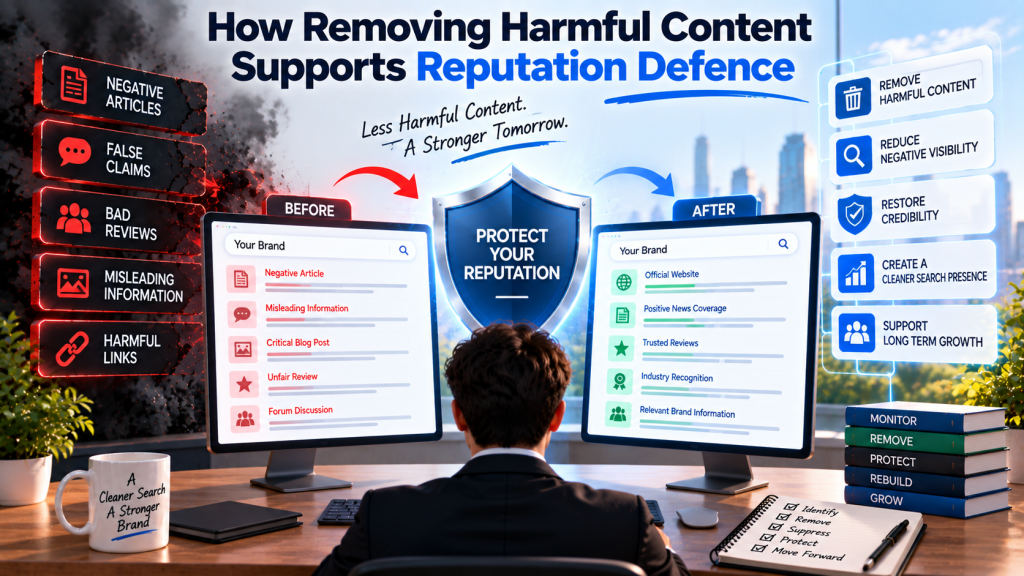
Harmful online content has the potential to damage trust, reduce sales, affect hiring efforts, and weaken brand credibility. For this reason, reputation defence is not only about creating positive content. It also involves identifying harmful material, understanding when removal may be possible, and taking appropriate action through legal, platform, or search engine processes.
This guide explains how removing harmful content supports online reputation defence and why it should be part of a broader long-term reputation management strategy.
What Is Harmful Online Content?
Harmful content refers to online material that negatively affects an individual’s or business’s reputation.
Examples include:
- False news articles
- Defamatory statements
- Fake reviews
- Impersonation profiles
- Copyright infringement
- Privacy violations
- Outdated information
- Misleading blog posts
- Unauthorized personal information
- Fraudulent websites
Not every negative article or review qualifies as harmful. Many forms of criticism are lawful and protected as opinion.
Why Harmful Content Matters
People often research businesses before making decisions.
Negative or misleading content may cause potential customers to:
- Lose confidence
- Delay purchases
- Choose competitors
- Question business credibility
- Share negative information with others
The longer harmful content remains visible, the greater its potential impact.
Understanding Reputation Defence
Reputation defence is the ongoing process of protecting how a business or individual is perceived online.
It combines several activities, including:
- Reputation monitoring
- Review management
- Content creation
- Search visibility improvement
- Legal compliance
- Content removal where appropriate
Removing harmful content is one part of a larger reputation strategy.
When Content May Be Eligible for Removal
Certain types of content may qualify for removal depending on applicable laws and platform policies.
Examples include:
- Defamatory material
- Copyright violations
- Non-consensual private information
- Identity theft
- Fake business profiles
- Fraudulent impersonation
- Content violating platform rules
Eligibility depends on the specific facts, applicable laws, and the policies of the website or search platform.
Removing False Information
False factual statements can create significant reputation damage.
Examples may include:
- Incorrect accusations
- Fabricated events
- False business claims
- Inaccurate personal details
Correcting or removing demonstrably false information can help restore public confidence.
Addressing Privacy Violations
Personal information published without authorization may expose individuals or businesses to unnecessary risks.
Examples include:
- Home addresses
- Phone numbers
- Financial information
- Identity documents
- Personal contact details
Many platforms provide reporting mechanisms for qualifying privacy concerns.
Managing Fake Reviews
Fake reviews may mislead potential customers and unfairly damage a business’s reputation.
Businesses should:
- Monitor review platforms regularly.
- Report reviews that violate platform policies.
- Respond professionally when appropriate.
- Encourage authentic customer feedback.
Most review platforms independently determine whether reported reviews should be removed.
Dealing With Impersonation
Impersonation accounts can confuse customers and harm brand credibility.
These accounts may:
- Pretend to represent your business
- Mislead customers
- Spread false information
- Request payments fraudulently
Many platforms allow verified businesses to report impersonation.
Correcting Outdated Content
Some information may no longer accurately represent your business.
Examples include:
- Closed locations
- Former leadership
- Old pricing
- Discontinued products
- Historical events presented without context
Updating or correcting outdated information helps ensure customers receive accurate details.
Protecting Customer Trust
Customers expect businesses to provide accurate and reliable information.
Removing harmful content helps:
- Reduce confusion
- Improve credibility
- Strengthen confidence
- Support informed decisions
- Reinforce professionalism
Trust is easier to maintain when misinformation is addressed promptly.
Support Search Reputation
Search engines often display publicly available content that remains accessible online.
When harmful content is removed from its original source or addressed through appropriate processes, its visibility in search results may also change over time.
This supports a more accurate representation of your business.
Strengthen Brand Credibility
A consistent and accurate online presence reinforces professionalism.
Businesses that actively maintain their digital information often appear:
- More trustworthy
- Better organized
- Customer focused
- Transparent
- Reliable
Credibility contributes to stronger long-term relationships.
Combine Removal With Positive Content
Content removal alone is rarely a complete reputation strategy.
Businesses should also publish:
- Educational articles
- Company updates
- Customer success stories
- Case studies
- Industry resources
- Frequently asked questions
Positive content helps strengthen overall digital authority.
Monitor Online Mentions
Continuous monitoring allows businesses to identify new issues quickly.
Track:
- Search results
- Review platforms
- Social media
- News websites
- Blogs
- Forums
Early detection often simplifies reputation management.
Work Within Platform Policies
Each website has its own moderation rules.
Before requesting removal:
- Review platform guidelines.
- Collect supporting evidence.
- Submit accurate reports.
- Follow required procedures.
- Maintain professional communication.
Well-documented requests generally receive more effective evaluation.
Understand Legal Options
Certain situations may require legal guidance.
Examples include:
- Defamation
- Intellectual property disputes
- Privacy violations
- Identity theft
- Fraudulent impersonation
Legal remedies vary depending on jurisdiction and the specific facts involved.
Avoid Unethical Practices
Businesses should avoid attempting to suppress criticism through dishonest methods.
Avoid:
- Filing false reports
- Creating fake positive reviews
- Harassing reviewers
- Publishing misleading information
- Manipulating public discussions
Ethical reputation management produces stronger long-term results.
Build a Long-Term Reputation Strategy
Removing harmful content should be one part of a broader plan that includes:
- Excellent customer service
- Reputation monitoring
- Authentic reviews
- Valuable content creation
- Strong search visibility
- Transparent communication
Long-term consistency strengthens resilience.
Common Mistakes Businesses Make
Organizations sometimes weaken their reputation defence by:
- Ignoring harmful content
- Waiting too long to respond
- Assuming all negative content can be removed
- Responding emotionally
- Failing to monitor search results
- Neglecting positive content creation
Addressing these mistakes improves overall reputation management.
Common Myths About Content Removal
Several misconceptions surround harmful content removal.
Myth 1: Every negative article can be removed.
No. Lawful criticism, factual reporting, and protected opinions generally cannot be removed simply because they are unfavorable.
Myth 2: Removing one page fixes reputation problems.
Content removal is only one component of reputation defence. Long-term trust also depends on customer service, transparency, and positive brand building.
Myth 3: Search engines create harmful content.
Search engines usually index publicly available information created by third-party websites. They generally do not author the content they display.
Myth 4: Reputation management only means removing content.
Effective reputation management also includes monitoring, communication, review management, content publishing, customer satisfaction, and ongoing brand development.
The Future of Reputation Defence
Digital reputation management continues evolving alongside advances in search technology and artificial intelligence.
Future developments are expected to include:
- Improved content verification
- Faster moderation systems
- Enhanced privacy protections
- Stronger identity verification
- Better spam detection
- Greater emphasis on trustworthy information
Businesses that invest in ethical reputation management will be better prepared for future digital challenges.
Final Thoughts
Removing harmful online content can play an important role in protecting your business’s reputation, but it should always be approached thoughtfully and within the boundaries of applicable laws and platform policies. False information, privacy violations, impersonation, fraudulent reviews, and other policy-violating content may qualify for removal, while lawful criticism and honest customer opinions generally remain protected. Understanding this distinction helps businesses focus their efforts where they are most effective.
The strongest reputation defence combines appropriate content removal with proactive reputation management. Monitoring online mentions, publishing valuable content, encouraging authentic customer reviews, maintaining accurate business information, and providing exceptional customer experiences all contribute to long-term credibility. By taking a balanced and ethical approach, businesses can build a resilient online presence that earns trust across search engines, review platforms, social media, and AI-powered search experiences.
Frequently Asked Questions
What is harmful online content?
Harmful online content includes material that may negatively affect a business or individual’s reputation, such as false statements, fake reviews, impersonation profiles, privacy violations, copyright infringement, or misleading information.
Can all negative online content be removed?
No. Lawful opinions, factual reporting, and genuine customer reviews are generally protected. Content removal is usually limited to material that violates laws or platform policies.
How does removing harmful content help reputation defence?
Removing qualifying harmful content can reduce misinformation, improve public confidence, protect customer trust, and support a more accurate online representation of a business.
What types of content are commonly eligible for removal?
Eligibility varies, but examples may include defamatory material, copyright violations, privacy breaches, identity theft, fake profiles, fraudulent impersonation, and content that violates platform guidelines.
Should businesses monitor their online reputation regularly?
Yes. Monitoring search results, reviews, news coverage, blogs, forums, and social media helps identify potential issues early and supports timely responses.
Does removing harmful content improve search results?
If harmful content is removed from its original source or addressed through appropriate legal or platform processes, its visibility in search results may change over time as search engines update their indexes.
Is content removal enough to protect a brand?
No. Effective reputation defence also includes positive content creation, customer service improvements, review management, transparent communication, and ongoing reputation monitoring.
Why is ethical reputation management important?
Ethical practices help build long-term trust, comply with platform policies, avoid legal risks, and create a sustainable reputation that benefits both businesses and customers.