
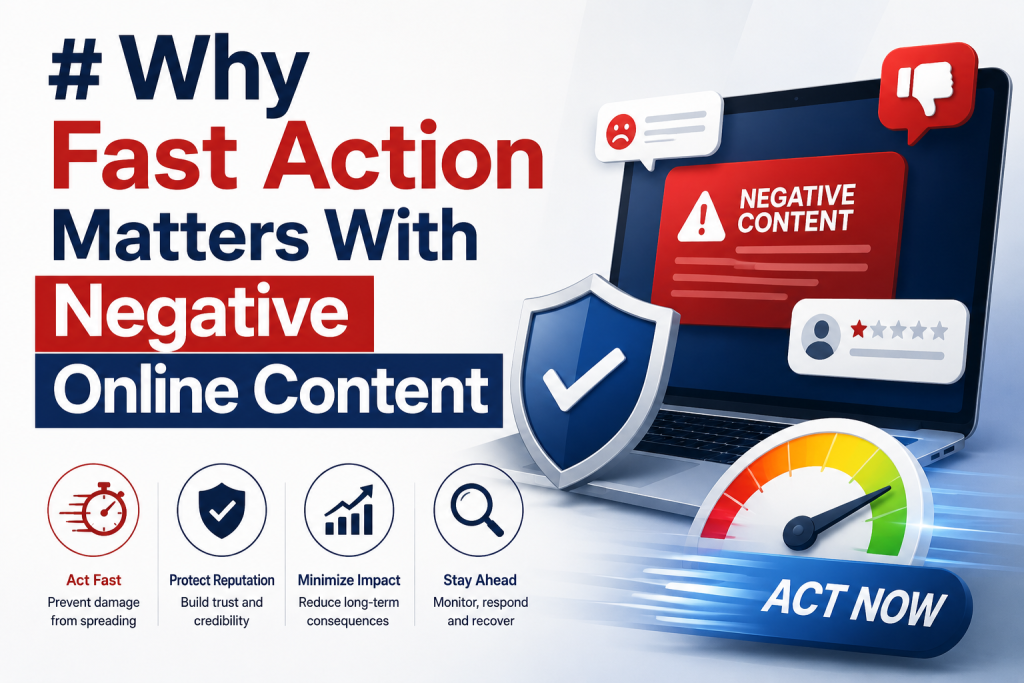

Negative online content can spread quickly and have a lasting impact on your reputation. Whether it’s a negative review, a misleading social media post, an unfavorable news article, or false information published on a website, the longer it remains unaddressed, the greater the potential damage. In today’s digital landscape, where information travels instantly, responding promptly is essential for protecting customer trust and maintaining your brand’s credibility.
Fast action does not mean reacting emotionally or rushing into decisions. Instead, it means identifying the issue early, assessing the situation carefully, and taking appropriate steps to minimize its impact. A well-planned response can often prevent a small issue from becoming a major reputation crisis.
This guide explains why acting quickly matters when dealing with negative online content and outlines practical strategies for protecting your online reputation.
What Is Negative Online Content?
Negative online content refers to publicly accessible information that may harm an individual or business’s reputation.
Examples include:
- Negative customer reviews
- False allegations
- Misleading blog posts
- Unfavorable news articles
- Social media complaints
- Forum discussions
- Fake reviews
- Videos or images shared with harmful intent
Not all negative content is inaccurate. Some criticism may reflect genuine customer experiences, while other content may be misleading or violate platform policies.
Why Speed Matters
The internet moves quickly. Content can be shared, copied, indexed by search engines, and discussed across multiple platforms within hours.
Acting quickly helps businesses:
- Protect customer trust
- Reduce misinformation
- Prevent wider distribution
- Maintain brand credibility
- Address customer concerns
- Limit long-term reputation damage
Delaying a response often allows negative content to gain more visibility and influence.
Negative Content Can Spread Rapidly
A single post can be shared across:
- Social media platforms
- News websites
- Blogs
- Forums
- Messaging apps
- Review websites
As more people interact with the content, its visibility may increase, making it harder to manage later.
Search Engines May Index Harmful Content
Search engines regularly discover and index new webpages.
If negative content is indexed and begins ranking for your brand name, it can influence potential customers before they visit your official website.
Addressing issues early can reduce the chances of harmful content becoming highly visible in search results.
Customer Trust Can Decline Quickly
Consumers often research businesses before making purchasing decisions.
If they encounter unanswered complaints or misleading information, they may question your reliability and choose a competitor instead.
A prompt, professional response demonstrates that your business values customer feedback and takes concerns seriously.
Small Problems Can Become Reputation Crises
Many major reputation issues begin with a single unresolved complaint.
Without timely attention, negative situations may lead to:
- Increased media attention
- Additional customer complaints
- Social media discussions
- Lower review ratings
- Reduced customer confidence
Early intervention helps prevent escalation.
Respond Professionally, Not Emotionally
Acting quickly does not mean responding impulsively.
When replying to negative content:
- Stay calm
- Be respectful
- Acknowledge concerns
- Avoid arguments
- Offer solutions where appropriate
- Continue sensitive discussions privately when possible
Professional communication reflects positively on your brand.
Monitor Your Online Presence Regularly
The faster you discover a problem, the faster you can respond.
Monitor:
- Google search results
- Customer reviews
- Social media mentions
- News articles
- Business directories
- Forums
- Blogs
Regular monitoring helps detect issues before they become widespread.
Verify the Facts First
Before taking action, determine whether the content is:
- Accurate
- Misleading
- Fake
- Outdated
- Policy-violating
- Posted by a real customer
Understanding the nature of the content helps you choose the most appropriate response.
Report Policy Violations
Many online platforms allow users to report content that violates their guidelines.
Examples may include:
- Fake reviews
- Spam
- Impersonation
- Harassment
- Copyright infringement
- Personal information exposure
- Fraudulent accounts
Reporting eligible content promptly may reduce its visibility or lead to its removal.
Communicate Transparently
Honest communication builds trust.
If your business made a mistake:
- Acknowledge the issue
- Explain the corrective action
- Keep customers informed
- Avoid making unrealistic promises
Transparency often strengthens credibility during difficult situations.
Publish Positive, Helpful Content
One effective way to reduce the impact of negative content is to strengthen your overall online presence.
Create:
- Educational blog posts
- Customer success stories
- Case studies
- FAQs
- Press releases
- Industry insights
- Videos
High-quality content supports SEO and provides customers with accurate information.
Encourage Genuine Customer Reviews
Satisfied customers can help balance occasional negative feedback.
Encourage authentic reviews after positive customer experiences.
Avoid:
- Purchasing fake reviews
- Pressuring customers
- Offering rewards for positive ratings
Authentic feedback builds long-term trust.
Prepare a Crisis Response Plan
Every business should have a plan for handling reputation challenges.
Include:
- Response procedures
- Internal responsibilities
- Approval processes
- Media communication guidelines
- Customer support protocols
- Escalation procedures
Preparation enables faster and more consistent responses.
Learn From Negative Feedback
Not every negative comment is harmful.
Constructive criticism can reveal opportunities to improve:
- Products
- Services
- Customer support
- Communication
- Business processes
Using feedback to improve demonstrates accountability.
Common Mistakes to Avoid
Businesses sometimes make reputation problems worse through poor decisions.
Avoid:
- Ignoring complaints
- Responding emotionally
- Arguing publicly
- Posting misleading statements
- Deleting legitimate criticism without explanation
- Delaying responses
- Failing to monitor online activity
- Providing inconsistent information
Professionalism is essential during every interaction.
Long-Term Reputation Protection
Fast responses are only one part of a successful reputation strategy.
Long-term protection requires businesses to:
- Monitor online mentions
- Deliver excellent customer service
- Publish valuable content
- Improve SEO
- Maintain accurate business information
- Build customer relationships
- Strengthen cybersecurity
- Continuously evaluate reputation risks
Consistency helps build resilience against future challenges.
Conclusion
Negative online content can influence customer perceptions within minutes, making timely action essential for protecting your reputation. Responding quickly allows businesses to address concerns, reduce misinformation, maintain customer trust, and prevent minor issues from escalating into larger reputation crises.
By combining regular monitoring, professional communication, high-quality content, proactive review management, and a well-prepared crisis response plan, businesses can effectively manage negative online content and strengthen their long-term digital reputation. In today’s connected world, responding promptly and thoughtfully is one of the most valuable investments you can make in your brand.
Frequently Asked Questions (FAQs)
Why is it important to respond quickly to negative online content?
Quick responses help reduce the spread of misinformation, protect customer trust, prevent reputation damage, and demonstrate that your business takes concerns seriously.
What types of negative online content can affect a business?
Negative reviews, false allegations, misleading articles, social media complaints, forum discussions, fake reviews, and unfavorable news coverage can all influence public perception.
Should businesses respond to every negative review?
Businesses should generally respond to genuine reviews professionally and respectfully. Fake or policy-violating content should be reported to the platform when appropriate.
Can negative online content affect search results?
Yes. Search engines may index negative content, making it visible to potential customers who search for your business online.
How can businesses monitor their online reputation?
Businesses can regularly monitor search results, review platforms, social media mentions, news articles, blogs, and online directories to identify issues early.
What is the biggest mistake businesses make when facing online criticism?
One of the most common mistakes is ignoring the issue or responding emotionally, which can damage trust and cause the situation to escalate.
How can businesses reduce the impact of negative online content?
Businesses can respond professionally, publish valuable content, improve SEO, encourage genuine customer reviews, monitor their online presence, and address legitimate customer concerns promptly.