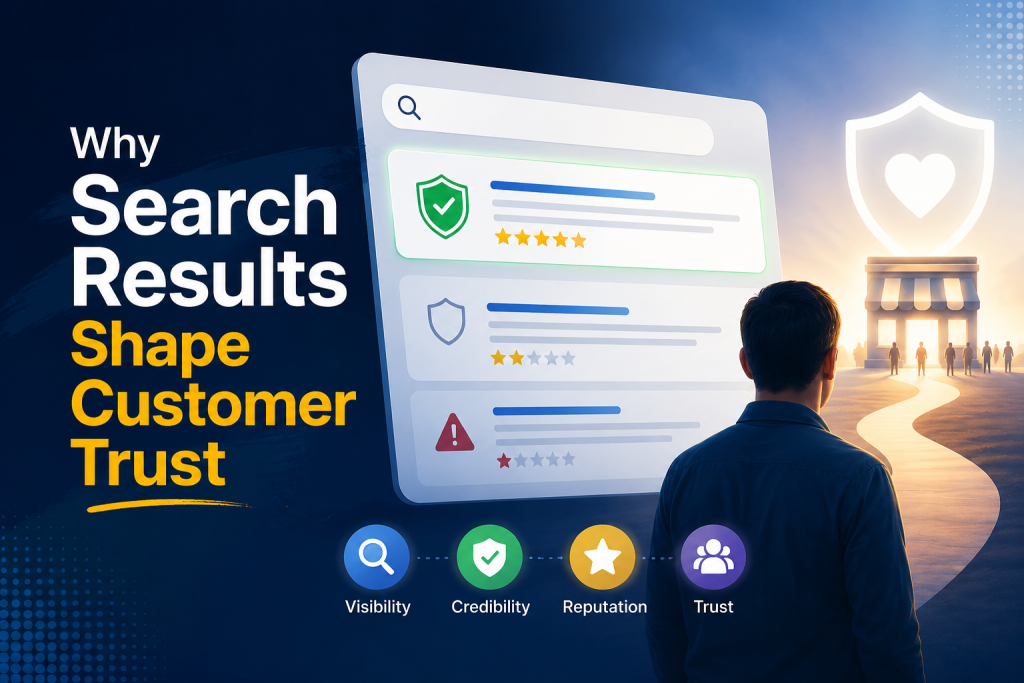

Before customers contact a business, they usually search online. They want to know if the company is real, reliable, experienced, and trusted by others. Within seconds, search results can create confidence or doubt.
This is why search results play such a powerful role in customer trust. Your website, reviews, articles, social profiles, news mentions, and third party listings all work together to shape how people see your brand. Even if your business offers excellent service, poor search results can make customers hesitate.
In today’s digital world, search results are not just information. They are reputation signals.
Search Results Create the First Impression
For many customers, Google is the first place they meet your brand. They may search your company name after seeing an ad, receiving a referral, reading a social media post, or hearing about you from someone else.
What they find matters.
If the first page shows a professional website, positive reviews, useful content, and active social profiles, your brand looks credible. If it shows complaints, poor reviews, outdated pages, or confusing information, trust drops.
First impressions online happen quickly. Customers may not read every result in detail. They scan titles, ratings, snippets, and visible sources. That quick scan can influence whether they click, call, buy, or leave.
Customers Use Search to Reduce Risk
Every purchase involves some level of risk. Customers want to avoid bad service, poor quality, wasted money, scams, delays, or regret. Search results help them reduce that risk.
They look for signs such as:
- Positive reviews
- Clear contact information
- Professional website
- Helpful content
- Real customer stories
- Media mentions
- Consistent business details
- Strong social presence
- Transparent policies
When these signals are present, customers feel safer. When they are missing, customers may choose a competitor.
Trust is often built through reassurance. Search results provide that reassurance before direct contact happens.
Negative Results Can Create Doubt
A single negative result can affect perception, especially if it appears near the top of search results. Customers may wonder if the complaint is true, if the business has unresolved issues, or if they should avoid the risk.
Negative results may include:
- Bad reviews
- Complaint pages
- Critical articles
- Forum discussions
- Social media posts
- Legal mentions
- Scam accusations
- Outdated controversy
Not all negative content is accurate or fair. But customers may not know the full context. They often judge based on what is visible.
This is why businesses must monitor search results and respond strategically. Ignoring harmful content does not make it disappear. It may continue shaping customer decisions silently.
Reviews Are a Major Trust Signal
Reviews often appear directly in search results. Star ratings, review counts, and customer comments can strongly influence trust.
A business with many positive reviews looks more reliable. A business with poor ratings or no reviews may struggle to win confidence.
However, customers do not expect perfection. A few negative reviews can look normal. What matters is the overall pattern and how the business responds.
Professional review responses show that the brand listens. Defensive or rude responses can damage trust further. No response at all may suggest that the business does not care.
Consistency Builds Confidence
Customers trust brands that look consistent across the internet. If your website says one thing, your Google listing says another, and your social profiles are outdated, people may feel uncertain.
Consistency should cover:
- Brand name
- Logo
- Address
- Phone number
- Services
- Opening hours
- Social links
- Business description
- Tone of communication
Consistent information makes your business look organized and legitimate. Inconsistent information creates friction and doubt.
Search engines also use consistency to understand your brand better, which can support visibility.
Positive Content Strengthens Trust
Positive content gives customers more reasons to believe in your brand. It shows expertise, experience, and credibility.
Examples include:
- Blog articles
- Case studies
- Testimonials
- Press mentions
- Awards
- Service guides
- FAQs
- Founder profiles
- Customer success stories
- Videos
This content helps customers answer important questions. Can this business solve my problem? Do they understand my industry? Have they helped others? Are they active and professional?
The more useful positive content customers find, the more confident they become.
Search Results Influence Word of Mouth
Even when someone recommends your business, the customer may still search your brand before taking action. A strong referral can be weakened by poor search results.
For example, a friend may say your company is excellent. But if the customer searches and sees negative reviews or unclear information, they may hesitate.
This means online reputation supports offline word of mouth. Good search results make referrals stronger. Poor search results can reduce their impact.
AI Search Adds a New Layer of Trust
Search behaviour is changing. Customers are now using AI tools to ask about brands, compare options, and get recommendations. These tools may summarize information from search results, websites, reviews, and public sources.
If your search presence is strong, AI tools are more likely to understand your brand accurately. If your search results are weak or negative, AI answers may reflect that.
This makes search reputation even more important. Your brand must be clear and trustworthy not only for human users, but also for AI systems that help users make decisions.
Businesses Must Own More of Their Search Page
A strong brand should control or influence as much of its search page as possible. This does not mean manipulating results. It means building enough quality assets that accurately represent your business.
Important assets include:
- Official website
- Blog content
- Social profiles
- Review pages
- Directory listings
- Videos
- Press coverage
- Case studies
- Thought leadership content
When these assets rank well, customers see a fuller and more positive picture of your brand.
Search Trust Affects Revenue
Search results can directly affect enquiries, sales, bookings, partnerships, and hiring. If customers trust what they see, they are more likely to move forward. If they feel uncertain, they may leave.
This is why reputation management is not just a branding activity. It is connected to business growth.
A company may spend money on ads, social media, and sales campaigns, but if customers search the brand and find negative results, conversions can drop. Marketing creates attention. Search trust helps convert that attention into action.
How to Improve Customer Trust Through Search
To build stronger trust, businesses should:
- Monitor branded search results regularly
- Keep website content updated
- Respond to reviews professionally
- Create helpful blog content
- Publish case studies and testimonials
- Build trusted third party mentions
- Maintain active social profiles
- Fix incorrect business listings
- Address negative content strategically
- Improve customer experience
These steps help create a stronger and more trustworthy search presence over time.
Conclusion
Search results shape customer trust because they show people what others say, how your brand presents itself, and whether your business appears reliable. Customers use search to reduce risk, compare options, and confirm confidence before making decisions.
A strong search presence can support growth, while poor search results can create hesitation. That is why every business should treat search results as part of its reputation strategy.
When your brand appears accurate, positive, consistent, and helpful online, customers are more likely to trust you. And in a competitive market, trust is often the reason they choose your business over another.