
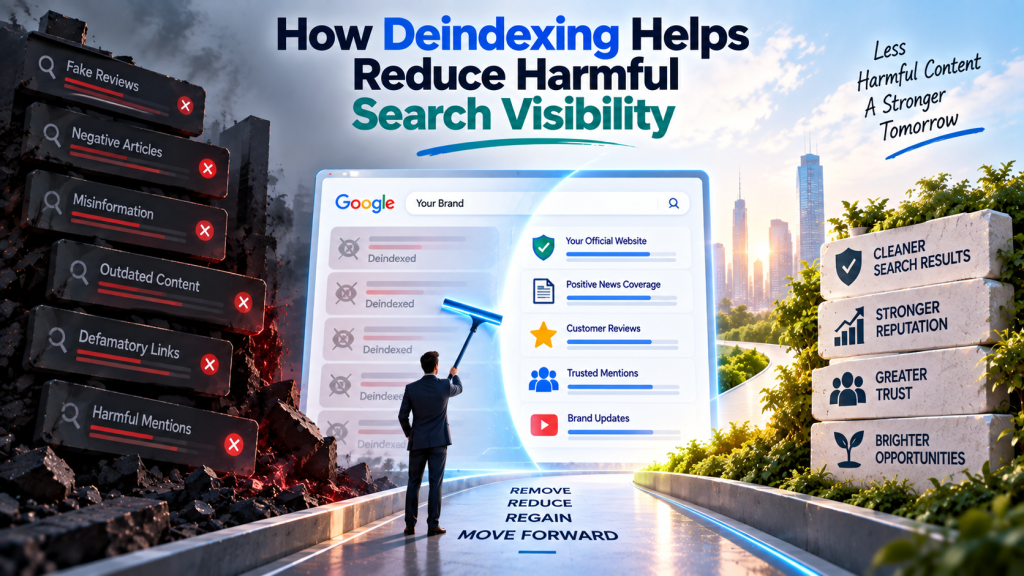

In today’s digital world, a single negative webpage can remain visible in search results for years, affecting how customers, employers, investors, and business partners perceive your brand. Harmful content such as outdated articles, duplicate pages, false information, or privacy-related content can continue to attract attention simply because it appears in search engine results.
One strategy that may help reduce the visibility of certain pages is deindexing. While deindexing does not delete content from the internet, it can prevent specific pages from appearing in search engine results under certain circumstances. As part of a broader online reputation management strategy, deindexing can help reduce the impact of harmful or unnecessary search visibility.
This guide explains what deindexing is, how it works, when it is appropriate, and how it supports online reputation management.
What Is Deindexing?
Deindexing is the process of removing a webpage from a search engine’s index so that it no longer appears in search results.
When a page is deindexed:
- It does not appear in normal search results.
- Users cannot easily discover it through search engines.
- The page may still exist if someone has the direct URL.
- Search engines stop showing the page for relevant searches after processing the change.
Deindexing affects search visibility, not the existence of the content itself.
How Search Engines Index Pages
Before understanding deindexing, it helps to know how search engines work.
Search engines generally follow three steps:
- Crawling – Search engine bots discover webpages by following links.
- Indexing – The discovered pages are analyzed and stored in the search engine’s database.
- Ranking – Indexed pages are evaluated and displayed based on relevance and quality when users perform searches.
If a page is removed from the index, it is no longer eligible to appear in standard search results.
Why Harmful Search Visibility Matters
Search results often create the first impression of a person or business.
If harmful pages rank highly, they may influence decisions before users visit your official website.
Examples include:
- Outdated articles
- False or misleading information
- Duplicate content
- Expired promotional pages
- Old legal notices
- Obsolete business information
- Low-quality archived content
Reducing the visibility of these pages can improve how your brand is perceived online.
Situations Where Deindexing Can Help
Deindexing may be useful in several situations.
Outdated Content
Old webpages that no longer reflect your business may continue appearing in search results.
Examples include:
- Discontinued services
- Old announcements
- Expired offers
- Obsolete pricing pages
Removing these pages from search results helps present more current information.
Duplicate Pages
Duplicate content can confuse both users and search engines.
Deindexing unnecessary duplicate pages can improve website organization and search performance.
Privacy Concerns
If a page exposes personal or sensitive information, reducing its search visibility may help protect privacy, depending on the circumstances.
Low-Quality Content
Thin or outdated pages that no longer provide value may weaken your website’s overall quality.
Removing them from search results can improve the user experience.
Reputation Management
In some cases, reducing the visibility of outdated or irrelevant pages allows more useful, accurate, and authoritative content to become more prominent in search results.
What Deindexing Cannot Do
It is important to understand the limitations of deindexing.
Deindexing does not:
- Delete webpages from the internet
- Remove content from the original website
- Erase information from all search engines automatically
- Guarantee permanent removal if indexing rules change
- Remove screenshots or copies published elsewhere
If complete removal is required, the content usually needs to be deleted from the source website or addressed through the site’s owner or applicable legal processes.
Common Ways Pages Are Deindexed
Website owners may choose to prevent indexing for certain pages using appropriate technical methods.
Common approaches include:
- Adding a noindex directive to a page
- Returning the appropriate HTTP status for removed content
- Removing obsolete pages from the sitemap
- Using search engine removal tools for eligible situations
- Blocking indexing of unnecessary pages where appropriate
The correct approach depends on the specific circumstances and whether you control the website.
Deindexing and Online Reputation Management
Deindexing is one tool within a broader reputation management strategy.
It works best alongside:
- Publishing high-quality content
- Search engine optimization (SEO)
- Customer review management
- Accurate business information
- Brand monitoring
- Positive media coverage
Together, these strategies help strengthen your online presence.
Deindexing vs. Content Removal
These terms are often confused but have different meanings.
Deindexing means:
- The content may remain online.
- Search engines stop showing it in normal search results.
Content removal means:
- The webpage itself is deleted or becomes inaccessible.
- Visitors can no longer access the original content.
Whenever possible, removing content at its source is more comprehensive than relying solely on deindexing.
SEO Benefits of Removing Unnecessary Pages
Reducing the number of low-value indexed pages may provide SEO benefits by helping search engines focus on your most valuable content.
Potential benefits include:
- Better crawl efficiency
- Improved website quality
- Reduced duplicate content
- Stronger topical relevance
- Improved user experience
However, valuable pages should not be deindexed simply to reduce the total number of indexed pages.
Monitor Search Results Regularly
Businesses should monitor search visibility to identify pages that may require attention.
Track:
- Branded search results
- Old webpages
- Duplicate listings
- Customer reviews
- News articles
- Directory listings
- Search performance
Regular monitoring helps identify outdated or unnecessary content before it affects your reputation.
Build Positive Content
Reducing harmful visibility is only one part of reputation management.
Businesses should also create valuable content such as:
- Educational articles
- Case studies
- Customer success stories
- FAQs
- Industry insights
- Press releases
- Videos
Positive content strengthens search visibility and provides users with accurate information.
Common Mistakes to Avoid
Businesses sometimes make errors when trying to reduce harmful search visibility.
Avoid:
- Deindexing valuable pages that drive traffic
- Ignoring outdated website content
- Assuming deindexing removes content completely
- Forgetting to update internal links
- Neglecting technical SEO
- Failing to monitor search results after changes
A thoughtful strategy helps avoid unintended SEO issues.
Long-Term Search Visibility Strategy
Managing search visibility requires continuous effort.
Successful businesses regularly:
- Audit indexed pages
- Update outdated content
- Remove unnecessary pages where appropriate
- Improve website quality
- Publish authoritative content
- Strengthen SEO
- Monitor branded search results
- Maintain accurate online information
Long-term consistency helps build a stronger digital reputation.
Conclusion
Deindexing can be an effective way to reduce the visibility of outdated, duplicate, or unnecessary pages in search results, making it a valuable component of an online reputation management strategy. While it does not remove content from the internet, it can help ensure that users are more likely to find current, accurate, and relevant information when searching for your brand.
When combined with quality content, search engine optimization, proactive reputation monitoring, and excellent customer service, deindexing supports a healthier digital presence and helps businesses present their best information to potential customers.
Frequently Asked Questions (FAQs)
What is deindexing?
Deindexing is the process of removing a webpage from a search engine’s index so it no longer appears in standard search results.
Does deindexing delete a webpage?
No. Deindexing only affects search visibility. The webpage may still be accessible through its direct URL unless it has been removed from the website.
When should a page be deindexed?
A page may be considered for deindexing if it is outdated, duplicated, low-quality, no longer relevant, or should not appear in search results for business or technical reasons.
Can deindexing improve online reputation?
Yes. Deindexing can reduce the visibility of outdated or unnecessary pages, allowing more accurate and valuable content to become more prominent in search results.
Is deindexing the same as content removal?
No. Deindexing removes a page from search results, while content removal deletes or restricts access to the webpage itself.
Can every harmful webpage be deindexed?
No. You generally have control only over pages you own or manage. Content published on third-party websites usually requires cooperation from the site owner or other applicable processes to change its visibility.
Is deindexing good for SEO?
When used appropriately, deindexing low-value or duplicate pages can improve website quality and help search engines focus on more valuable content. However, important pages should not be deindexed unnecessarily.