
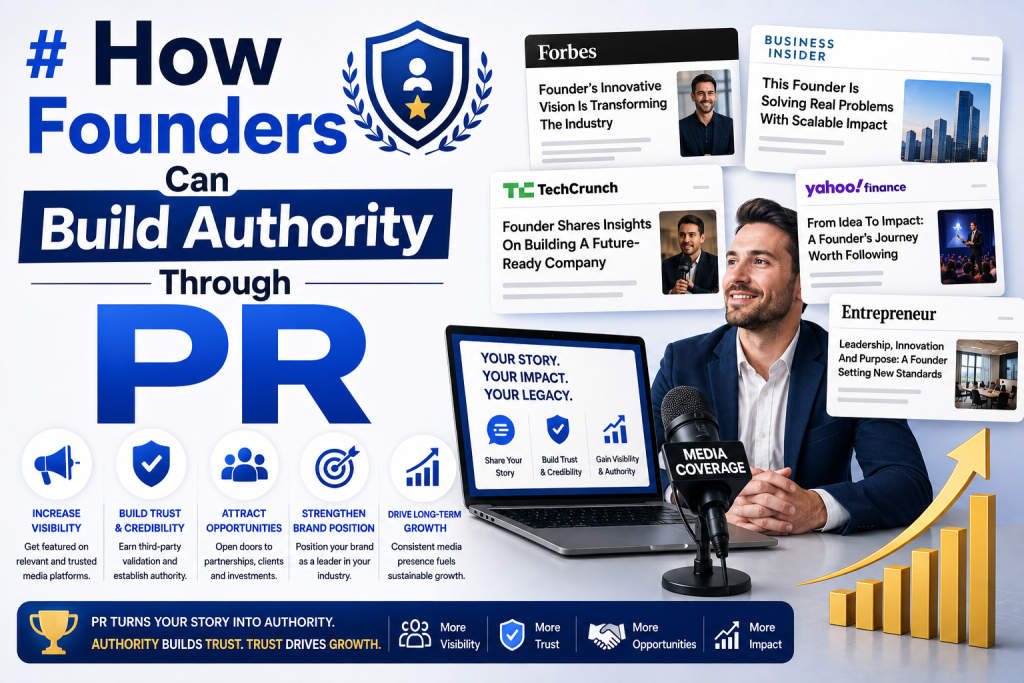

In today’s competitive business environment, people often trust founders as much as they trust the companies they lead. Customers, investors, employees, and business partners want to know who is behind a brand, what they stand for, and why they are qualified to solve a particular problem. This is where public relations (PR) becomes a powerful tool for building authority.
Founder-led PR is more than getting media coverage. It is about consistently sharing expertise, industry insights, achievements, and thought leadership through credible platforms. When founders are recognized as knowledgeable voices in their field, it strengthens both their personal reputation and the reputation of their business.
This guide explains how founders can use PR strategically to establish authority, increase credibility, and create long-term business opportunities.
What Is Founder PR?
Founder PR focuses on promoting the expertise, experience, and achievements of a company’s founder rather than only promoting the business itself.
It includes activities such as:
- Media interviews
- Press releases
- Expert commentary
- Guest articles
- Podcast appearances
- Speaking engagements
- Industry awards
- Thought leadership content
The goal is to position the founder as a trusted expert whose knowledge benefits customers, the industry, and the wider business community.
Why Founder Authority Matters
People naturally connect with people more than with logos.
A founder with a strong public profile can:
- Build customer trust
- Increase brand credibility
- Attract investors
- Support recruitment
- Generate media attention
- Create networking opportunities
- Strengthen customer loyalty
- Improve business visibility
When customers trust the founder, they are often more likely to trust the company.
PR Builds Credibility Faster Than Advertising
Advertising allows businesses to describe themselves.
Public relations allows trusted third parties to tell your story.
Media coverage, expert interviews, and industry publications often carry greater credibility because they are viewed as independent sources rather than paid promotions.
This makes PR one of the most effective ways to establish authority.
Define Your Expertise
Successful founder PR starts with identifying your area of expertise.
Ask yourself:
- What problems do you solve?
- What industry knowledge can you share?
- What unique experiences have shaped your journey?
- What trends can you explain?
- What lessons can others learn from you?
A clear niche makes it easier for journalists and audiences to recognize your authority.
Create a Strong Personal Brand
Your personal brand should reflect your professional values and expertise.
Maintain consistency across:
- LinkedIn profile
- Company website
- Professional biography
- Social media accounts
- Speaker profiles
- Media kits
A professional and consistent online presence reinforces credibility.
Share Valuable Industry Insights
Media outlets and audiences appreciate founders who educate rather than simply promote.
Share insights on:
- Industry trends
- Market challenges
- Business strategies
- Innovation
- Customer behavior
- Leadership lessons
- Emerging technologies
Educational content positions you as a thought leader.
Publish Thought Leadership Articles
Writing articles allows founders to demonstrate expertise in depth.
Consider publishing content such as:
- Industry analysis
- Opinion pieces
- Business lessons
- Case studies
- Research summaries
- Future predictions
- Practical guides
Consistent publishing helps build long-term authority.
Use Press Releases Strategically
Press releases help communicate important business developments to the media.
Potential topics include:
- Company launches
- Product releases
- Funding announcements
- Partnerships
- Awards
- Major milestones
- Expansion plans
- Community initiatives
Focus on newsworthy information rather than promotional language.
Build Relationships with Journalists
Strong media relationships often lead to recurring opportunities.
Best practices include:
- Respond promptly to inquiries
- Provide accurate information
- Respect deadlines
- Offer expert insights
- Avoid overly promotional responses
Reliable sources are more likely to receive future media coverage.
Participate in Podcasts and Interviews
Podcasts provide founders with opportunities to explain complex topics, share experiences, and connect with audiences on a personal level.
Discussions may include:
- Entrepreneurial journeys
- Industry challenges
- Leadership advice
- Market trends
- Customer success stories
These appearances also create valuable content that can be shared across multiple channels.
Speak at Industry Events
Conferences, webinars, and panel discussions help establish public authority.
Speaking engagements allow founders to:
- Demonstrate expertise
- Expand professional networks
- Increase media visibility
- Build audience trust
- Share original insights
Well-prepared presentations often generate additional PR opportunities.
Use Social Media Professionally
Social media extends the reach of PR efforts.
Share:
- Industry observations
- Company updates
- Media appearances
- Educational content
- Speaking events
- Business lessons
- Behind-the-scenes insights
Consistency is more important than frequency.
Earn Industry Recognition
Awards and professional recognition strengthen credibility.
Consider applying for:
- Industry awards
- Innovation competitions
- Leadership recognitions
- Business excellence programs
- Community leadership awards
Third-party recognition reinforces your authority.
Develop a Media Kit
A professional media kit makes it easier for journalists to feature you.
Include:
- Professional biography
- High-quality headshots
- Company overview
- Speaking topics
- Contact information
- Previous media coverage
- Key achievements
A complete media kit saves time and presents a professional image.
Maintain Consistency
Authority develops over time through repeated exposure.
Maintain consistency by:
- Publishing regularly
- Engaging with your audience
- Updating your online profiles
- Participating in industry discussions
- Continuing professional development
Long-term consistency builds lasting credibility.
Common PR Mistakes Founders Should Avoid
Some common mistakes can reduce the effectiveness of founder PR.
Avoid:
- Being overly promotional
- Sharing inaccurate information
- Ignoring media requests
- Inconsistent messaging
- Posting controversial content without purpose
- Neglecting your online reputation
- Focusing only on company promotion
- Failing to provide value to audiences
Authenticity and expertise should remain the foundation of every PR effort.
Measure Your PR Success
Track the impact of your PR activities using measurable indicators.
Useful metrics include:
- Media mentions
- Website traffic
- Brand searches
- Speaking invitations
- Social media engagement
- Backlinks
- Lead generation
- Business inquiries
Reviewing these metrics helps refine your PR strategy over time.
Long-Term Benefits of Founder PR
Investing in founder authority creates benefits that extend beyond media coverage.
Long-term advantages include:
- Stronger brand reputation
- Increased customer trust
- Higher search visibility
- Better investor confidence
- Improved recruitment
- More partnership opportunities
- Greater industry influence
- Sustainable business growth
Founder authority often becomes a competitive advantage that supports long-term success.
Conclusion
Public relations is one of the most effective ways for founders to establish credibility, demonstrate expertise, and build lasting authority within their industry. By consistently sharing valuable insights, engaging with the media, publishing thought leadership content, and participating in industry conversations, founders can strengthen both their personal reputation and the reputation of their businesses.
Authority is not built through a single interview or press release—it develops through consistent, authentic communication over time. Founders who invest in PR today create stronger relationships with customers, investors, partners, and the media, positioning themselves and their companies for long-term growth and recognition.
Frequently Asked Questions (FAQs)
What is founder PR?
Founder PR is the practice of promoting a company’s founder through media coverage, thought leadership, interviews, speaking engagements, and expert commentary to build credibility and authority.
Why is founder authority important?
A respected founder builds trust with customers, investors, employees, and business partners, which can strengthen the overall reputation and credibility of the business.
How can founders get media coverage?
Founders can earn media coverage by sharing newsworthy business updates, providing expert insights, building relationships with journalists, publishing valuable content, and participating in industry events.
Are press releases useful for founders?
Yes. Press releases are effective for announcing significant milestones such as funding rounds, product launches, partnerships, awards, and company expansions.
How does thought leadership support PR?
Thought leadership demonstrates expertise by sharing educational content, industry analysis, and practical insights that help audiences solve problems and understand market trends.
How long does it take to build authority through PR?
Building authority is a long-term process. Consistent media engagement, content creation, speaking opportunities, and industry participation over months and years typically produce the strongest results.
Can startup founders benefit from PR?
Absolutely. PR helps startup founders increase visibility, build credibility, attract investors, establish trust with customers, and differentiate their businesses in competitive markets.